
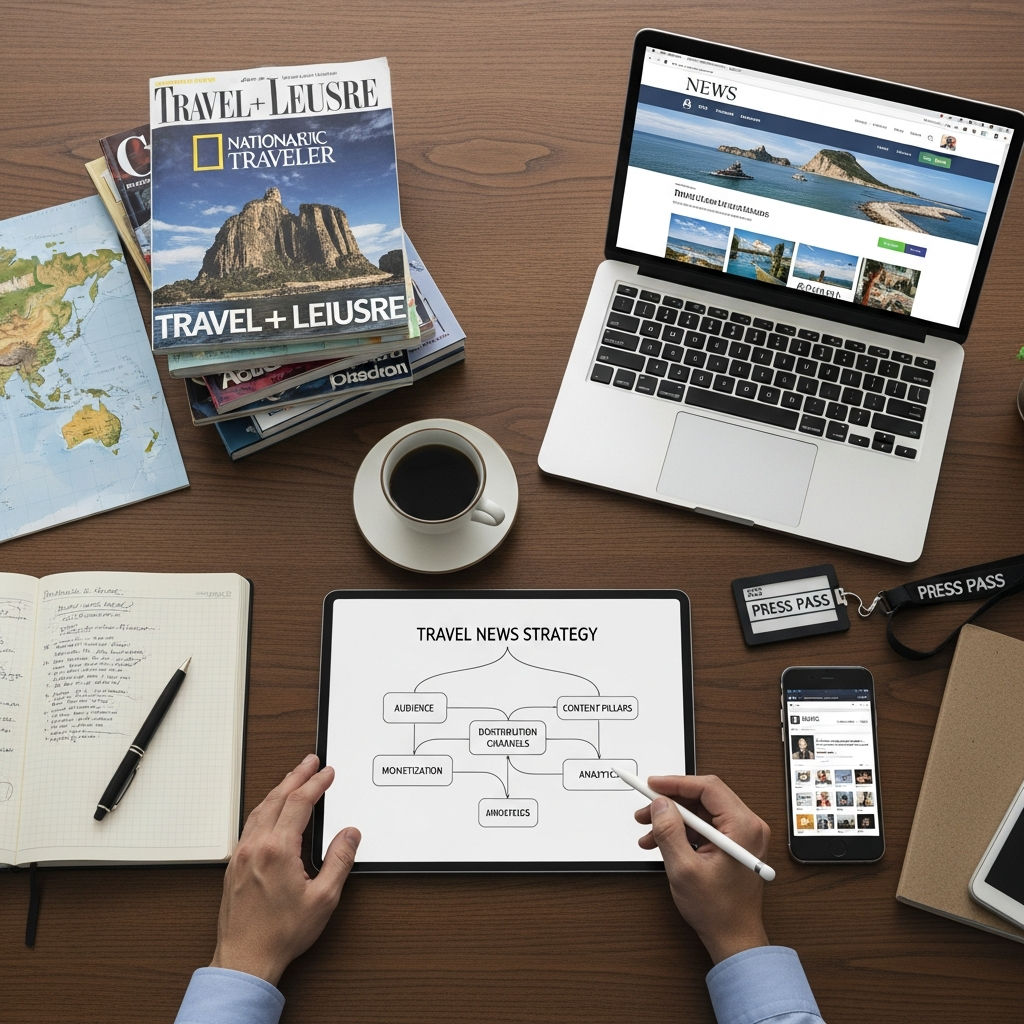
Building a Professional Travel News Strategy: A Comprehensive Guide
In an era where global travel is constantly evolving due to shifting regulations, climate concerns, and technological advancements, the demand for timely and accurate information has never been higher. However, entering the travel news space requires more than just a passion for exploration; it requires a sophisticated content strategy that balances speed with authority. To compete with established media giants and dominate search engine results pages (SERPs), publishers must move beyond generic destination guides and embrace a professional newsroom approach.
This guide outlines the essential pillars of building a professional travel news strategy designed to drive traffic, build authority, and foster reader loyalty.
1. Identifying Your Niche in a Crowded Market
The biggest mistake new travel news publishers make is trying to cover everything. In the eyes of search engines like Google, broad authority is difficult to earn. Success lies in “Niche Authority.” By narrowing your focus, you become a trusted source for a specific segment of the traveling public.
- Geographic Focus: Specialize in news for a specific region, such as “Southeast Asia Travel Updates” or “European Rail News.”
- Sector-Specific News: Focus on business travel, luxury hospitality, budget aviation, or sustainable tourism.
- Demographic Targeting: Tailor news specifically for digital nomads, family travelers, or solo female adventurers.
A professional strategy begins with a clearly defined mission statement that dictates which stories you cover and, more importantly, which stories you ignore.
2. Sourcing Reliable Information
In news reporting, your reputation is only as good as your last source. A professional strategy avoids “chasing clicks” based on rumors and instead relies on primary and secondary sources with high credibility.
Primary Sources
To stay ahead of the curve, monitor primary sources directly rather than waiting for other news outlets to report on them. These include:
- Government health and state department travel advisories.
- Official press rooms of major airlines (IATA, FAA) and hotel groups.
- Bureau of transportation statistics.
- Press releases from major travel tech companies.
Secondary Monitoring
Utilize tools like Google Alerts, Feedly, and Twitter (X) lists to monitor industry keywords. Following key journalists and industry analysts on LinkedIn can also provide early signals of shifting trends before they hit the mainstream media.
3. Mastering the Art of the “News Analysis”
Breaking news is a race to the bottom in terms of margins. If you simply report that “Airline X is launching a new route,” you are competing with thousands of other sites. To build a professional strategy, you must provide News Analysis.
Ask yourself: What does this news mean for the traveler?
If a new visa regulation is announced, don’t just state the facts. Explain how it changes the application process, the potential costs involved, and how it compares to previous policies. This adds “Experience and Expertise”—two pillars of Google’s E-E-A-T (Experience, Expertise, Authoritativeness, and Trustworthiness) guidelines.
4. Implementing SEO for News
Search engine optimization for news is fundamentally different from evergreen SEO. While evergreen content focuses on long-term stability, news SEO focuses on “Query Deserves Freshness” (QDF) and appearing in the “Top Stories” carousel.

Keyword Strategy
Use tools like Google Trends to identify rising search terms in real-time. Focus on long-tail keywords that include the current year or month, such as “Is it safe to travel to [Country] in 2024?” or “New EU entry requirements October update.”
Technical Requirements
- Schema Markup: Use
NewsArticleorAnalysisNewsArticlestructured data to help search engines understand your content type. - Core Web Vitals: News readers are often on mobile devices at airports or train stations. Your site must load instantly.
- XML News Sitemaps: Unlike a standard sitemap, a News Sitemap should only contain articles published in the last 48 hours.
The Power of Google Discover
For travel news, Google Discover is often a larger traffic driver than traditional search. To optimize for Discover, use high-quality, large-scale images (at least 1200px wide) and craft compelling (but not clickbait) headlines that pique curiosity.
5. Establishing E-E-A-T and Transparency
Google’s Quality Rater Guidelines emphasize E-E-A-T, especially for “Your Money or Your Life” (YMYL) topics, which includes travel safety and documentation. To be professional, your strategy must include high levels of transparency.
- Author Bylines: Every news piece should be attributed to a real person with a detailed bio explaining their expertise in the travel industry.
- Editorial Policy: Publish a clear editorial policy that explains how you check facts and correct errors.
- Dated Content: Always include a “Last Updated” timestamp. In travel news, information that is three months old can be dangerously obsolete.
6. Content Distribution and Multi-Channel Engagement
A professional travel news strategy does not end with a website. You must meet your audience where they are. Travel news is inherently social and shareable.
The Newsletter Advantage
Social media algorithms are fickle. A daily or weekly “Travel Briefing” newsletter allows you to own your audience. Use your newsletter to summarize the most important shifts in the industry, providing a curated experience that saves the reader time.
Social Amplification
Different platforms serve different news purposes:
- X (Twitter): Real-time updates, flight delays, and breaking industry news.
- LinkedIn: B2B travel news, hospitality trends, and aviation industry shifts.
- Instagram/TikTok: Visual “news you can use,” such as new airport lounge walkthroughs or “how-to” guides for new travel tech.
7. Measuring Success and Iteration
To maintain a professional standard, you must track the right metrics. While pageviews are important, they are often a vanity metric in the news world. Instead, focus on:
- Returning Visitor Rate: Does your news keep people coming back for more updates?
- Average Session Duration: Are readers consuming your entire analysis or bouncing immediately?
- E-mail Sign-up Rate: Are you successfully converting casual news readers into a loyal community?
Use these insights to refine your editorial calendar. If your readers respond heavily to “Flight Deal News” but ignore “Hotel Expansion News,” pivot your resources to where the engagement lies.
Conclusion
Building a professional travel news strategy is a marathon, not a sprint. It requires a disciplined approach to sourcing, a deep understanding of technical SEO, and a commitment to editorial integrity. By moving away from generic content and focusing on high-value news analysis and niche authority, you can build a travel news brand that not only survives the shifting digital landscape but thrives within it.
In the world of travel, information is the most valuable currency. By providing it accurately and efficiently, you become an indispensable part of the traveler’s journey.